Himalayan Singing Bowls: Ancient Sound Healing at Unmani Yoga Retreat, Nepal
In the quiet Himalayas of Nepal, where mountains breathe slowly and silence feels alive, an ancient healing tradition continues to guide seekers inward. This tradition is known as Himalayan Singing Bowl sound healing—a sacred practice rooted in vibration, awareness, and deep listening.
At Unmani Yoga Retreat, Himalayan singing bowls are not used as a trend or performance. They are offered as a meditative tool, a way to calm the nervous system, balance inner energy, and gently return the mind to stillness.
This blog explores the history, types, notes, healing science, spiritual meaning, and lived experience of Himalayan singing bowls, and how they are practiced in an authentic way at Unmani Yoga Retreat in Pokhara, Nepal.
The Ancient History of Himalayan Singing Bowls
Himalayan singing bowls are often called Tibetan singing bowls, but their true origin is deeply connected to Nepal, Tibet, and the Himalayan region. These bowls have been used for centuries by monks, healers, and meditation practitioners.
Historically, singing bowls were not made as decorative items. They were handmade brass bowls, carefully shaped through hand-hammering techniques passed down through generations. Traditional bowls were created from a seven-metal alloy, symbolizing the seven planets and their cosmic influence.
In ancient times, Himalayan singing bowls were used for:
Buddhist rituals
Mantra meditation
Healing ceremonies
Monastic daily practice
Deep relaxation and inner inquiry
Rather than “doing” something to the mind, the bowls helped practitioners listen, feel, and rest in sound.
Himalayan Singing Bowls and Himalayan Culture
In Himalayan culture, sound is considered sacred. Bells, chants, mantras, and bowls are all used to purify space and awareness.
The singing bowl is part of this living tradition. It represents:
Impermanence (sound arises and fades)
Presence (sound exists only now)
Unity (vibration moves through all things)
In Nepal, especially near the Himalayas, these bowls are still made using traditional hand-hammered methods, preserving their authentic resonance and overtones.
At Unmani Yoga Retreat, singing bowls are treated with respect and simplicity, honoring their Himalayan roots rather than modern commercialization.
Types of Himalayan Singing Bowls
Not all singing bowls are the same. Different bowls produce different vibrations, notes, and healing effects.
1. Handmade Brass Singing Bowls
These are traditional bowls made from a brass or seven-metal alloy. Their sound is rich, deep, and grounding.
2. Seven Metal Bowls
These bowls contain a blend of metals traditionally associated with:
Gold (Sun)
Silver (Moon)
Copper
Iron
Tin
Mercury
Lead
They are often used for chakra healing and full-body sound therapy.
3. Chakra Singing Bowls
These bowls are tuned to specific chakra notes—root, heart, crown, and others—supporting energy balance and emotional release.
4. Full Moon Bowls
Crafted during full moon periods, these bowls are believed to hold a softer, expansive vibration, often used in meditation and sound baths.
Each bowl has its own voice, and at Unmani, bowls are selected intuitively, not mechanically.
Notes, Frequencies, and Overtones
One of the most powerful aspects of Himalayan singing bowls is their complex harmonic sound.
When a bowl is played with a wooden stick or felt mallet, it produces:
A root note (the base sound)
Multiple overtones
Harmonic layers that interact with the nervous system
These sounds create a resonance effect, gently influencing brainwave patterns.
Sound and the Nervous System
Scientific studies and lived experience show that singing bowl vibrations help:
Slow brainwaves from beta to alpha and theta
Calm the nervous system
Reduce stress and anxiety
Support deep relaxation and mindfulness practice
This is why singing bowls are widely used in:
Yoga Nidra
Meditation retreats
Stress relief therapy
Trauma-informed relaxation
Chakra Healing and Energy Balance
The human body is not only physical—it is also energetic.
Himalayan singing bowls are often used for chakra healing, helping release blocked energy and restore natural flow.
Root chakra: grounding, safety, stability
Heart chakra: emotional healing, openness
Crown chakra: awareness, silence, clarity
The vibrations move through the body like waves, encouraging energy balance and aura cleansing without force or effort.
At Unmani Yoga Retreat, sound healing is offered gently, allowing participants to receive, not fix.
Sound Bath and Deep Meditation Experience
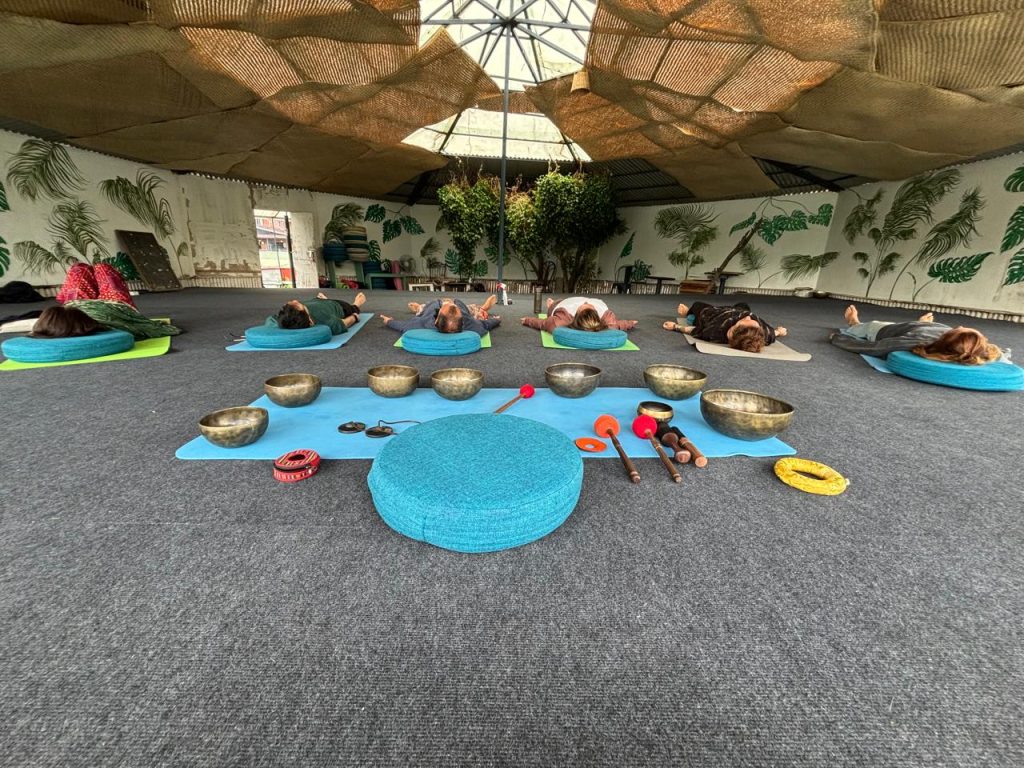
A sound bath is a meditative experience where participants lie down comfortably while bowls are played around and sometimes near the body.
During a Himalayan singing bowl sound bath:
The body enters deep relaxation
Thoughts naturally slow down
Awareness becomes spacious
Inner silence emerges effortlessly
Many people experience:
Emotional release
Sense of timelessness
Grounding and peace
Improved sleep
This makes sound baths especially supportive for people dealing with:
Overthinking
Burnout
Stress
Insomnia
Himalayan Singing Bowls and Yoga Practice
At Unmani Yoga Retreat, Himalayan singing bowls are integrated with:
Hatha yoga
Gentle Ashtanga flow
Meditation
Yoga Nidra
Sound helps deepen yoga practice by:
Preparing the mind before asana
Supporting relaxation after movement
Enhancing breath awareness
Creating a meditative atmosphere
Sound and silence work together. The bowl guides awareness inward, then disappears, leaving stillness behind.
Mantra Meditation and Sacred Sound
In ancient traditions, sound was never separate from spirituality.
Singing bowls are often combined with:
Mantra meditation
Silent sitting
Candle gazing
The bowl helps clear mental noise, making mantra repetition softer and more focused. Eventually, even mantra dissolves into silence.
This is the essence of meditation—not effort, but natural settling.
Modern Use vs Authentic Practice
Today, Himalayan singing bowls are popular worldwide. However, many bowls are mass-produced, machine-made, and used as background music.
At Unmani Yoga Retreat, the approach is different:
Fewer bowls, deeper listening
No performance or show
Emphasis on presence and intention
Respect for Himalayan tradition
Sound healing is not about “doing more,” but about allowing sound to do less.
Why Nepal Is the Best Place for Singing Bowl Healing
Practicing Himalayan singing bowls in Nepal is different from anywhere else.
Why?
The bowls originate here
The land carries deep spiritual history
The environment is quiet and natural
The Himalayas amplify stillness
In places like Pokhara, surrounded by mountains and fresh air, the sound naturally settles deeper.
This is why Nepal is considered the heart of Himalayan sound healing.
Himalayan Singing Bowl Experience at Unmani Yoga Retreat
At Unmani Yoga Retreat in Pokhara, Himalayan singing bowls are offered as part of:
Yoga retreats (1–7 days)
Meditation retreats
Sound healing sessions
Each session is guided with:
Care and sensitivity
Simple explanation
Space for silence
No prior experience is needed. Beginners and experienced meditators are equally welcome.
The intention is simple:
to help you rest deeply and remember inner stillness.
Final Reflection: Sound That Leads to Silence
Himalayan singing bowls are not about sound alone. They are about what remains after the sound fades.
In that quiet space:
The body softens
The mind rests
Awareness becomes clear
At Unmani Yoga Retreat, singing bowls are used not to impress, but to invite silence, presence, and healing.
If you feel drawn to sound, mountains, and simplicity, perhaps the Himalayas are calling you home.