How Singing Bowl Sound Healing Works: A Deep Exploration of Sound, Vibration, and Healing
Introduction
For thousands of years, singing bowls have been used in meditation, spiritual practices, and healing traditions throughout the Himalayan region. Today, sound healing with singing bowls is gaining worldwide recognition for its ability to promote deep relaxation, reduce stress, support emotional balance, and enhance overall well-being.
But how exactly does a singing bowl work? Is it simply a pleasant sound, or is there a deeper mechanism affecting the body and mind?
This guide explores the science, traditional wisdom, and therapeutic principles behind singing bowl sound healing.
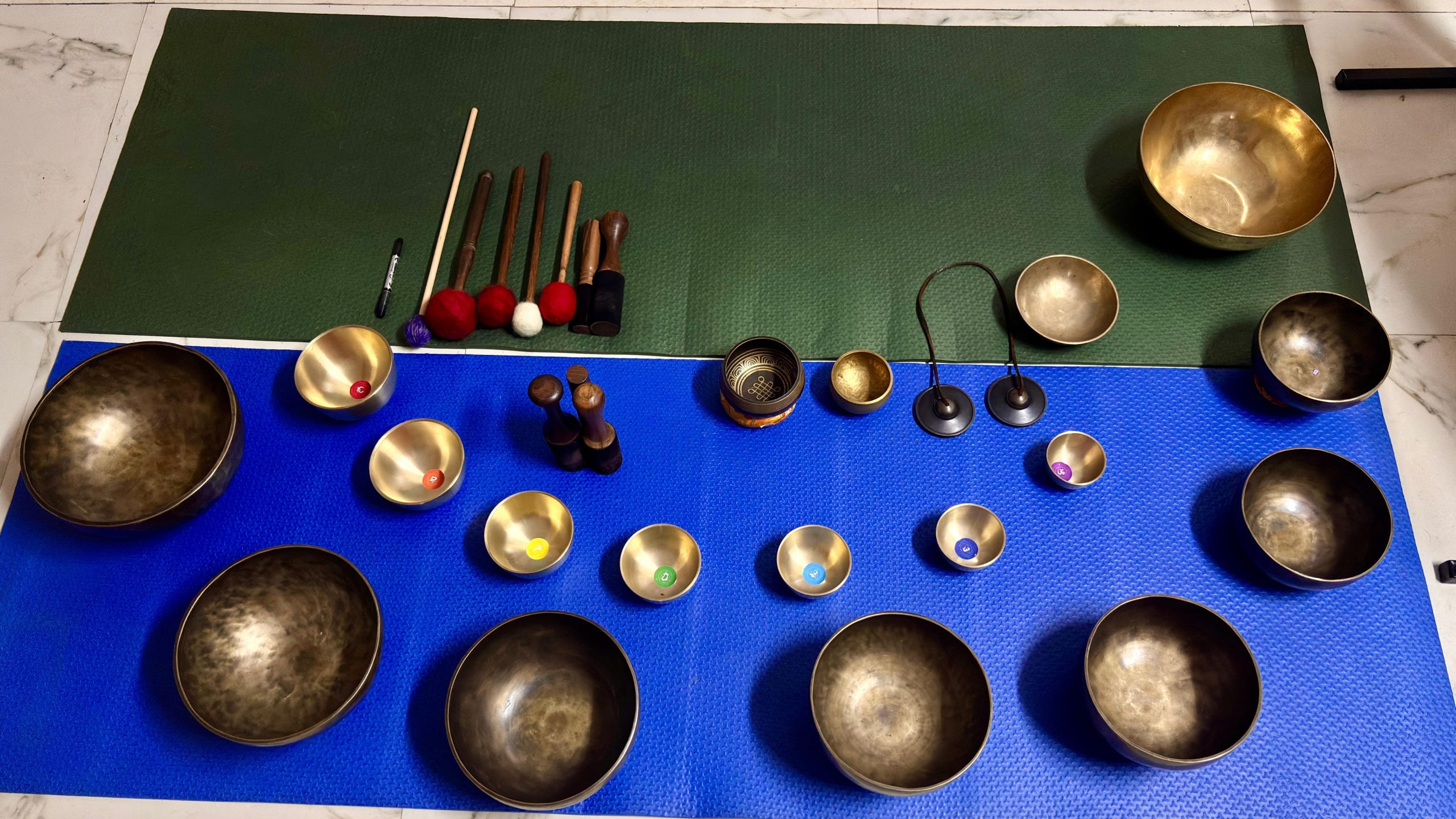
What Is a Singing Bowl?
A singing bowl is a resonant metal bowl that produces rich harmonic tones when struck or played with a mallet. Traditional Himalayan singing bowls are often crafted from multiple metals and are designed to create complex layers of sound frequencies.
Unlike ordinary musical instruments, singing bowls generate:
- Fundamental frequencies
- Harmonic overtones
- Sustained vibrations
- Resonant sound waves
These qualities make them particularly effective for meditation, relaxation, and therapeutic sound healing.
The Human Body as a Vibrational System
To understand sound healing, we must first understand vibration.
Everything in nature vibrates:
- Atoms vibrate
- Cells vibrate
- Organs generate electrical activity
- The brain produces measurable frequencies
The human body is approximately 60–70% water, making it an excellent conductor of vibration.
When a singing bowl is played near the body, sound waves travel through the air and are also perceived through physical vibration. Practitioners believe these vibrations can influence the body’s natural rhythms and promote balance.
The Science of Sound Waves
Sound is energy moving through a medium as a wave.
When a singing bowl vibrates:
- The bowl’s metal surface oscillates.
- Air molecules move in response.
- Sound waves spread outward.
- The ears and nervous system detect these waves.
- The brain interprets the information.
Research suggests that certain sound frequencies may influence:
- Heart rate
- Breathing patterns
- Stress response
- Nervous system regulation
- Brainwave activity
The result is often a shift from a state of tension toward a state of relaxation.
Brainwave Entrainment and Deep Relaxation
One of the most fascinating theories behind sound healing is brainwave entrainment.
The brain naturally produces different frequencies:
| Brainwave | State |
|---|---|
| Beta | Active thinking |
| Alpha | Relaxed awareness |
| Theta | Deep meditation |
| Delta | Deep sleep |
The sustained tones of singing bowls may encourage the brain to move from higher-frequency beta states into slower alpha and theta states.
This is why many people experience:
- Mental quietness
- Meditation without effort
- Enhanced creativity
- Deep relaxation
- Emotional release
Resonance: Why Vibrations Affect Us
Resonance occurs when one vibrating object influences another object with a similar frequency.
A simple example is a tuning fork causing another tuning fork to vibrate.
Sound healing practitioners believe a similar phenomenon can occur within the body.
When the body is under stress:
- Muscles tighten
- Breathing becomes shallow
- The nervous system becomes overactive
The smooth, coherent vibrations of singing bowls may help encourage relaxation and physiological balance through resonance.
The Nervous System and Sound Healing
Modern life often keeps people in a chronic “fight-or-flight” state.
This activates the sympathetic nervous system, leading to:
- Stress
- Anxiety
- Fatigue
- Sleep issues
Sound healing sessions are designed to activate the parasympathetic nervous system—the body’s “rest and restore” mode.
Many clients report:
- Slower breathing
- Reduced tension
- Greater calm
- Improved sleep quality
- Mental clarity
This may be one reason sound healing has become popular as a complementary wellness practice.
Traditional Himalayan Understanding of Sound Healing
In Himalayan traditions, healing is not only physical but also energetic.
Ancient practitioners viewed the body as an interconnected system of:
- Physical health
- Emotional health
- Mental balance
- Spiritual awareness
The vibrations of singing bowls were used to support harmony within this system.
Rather than treating symptoms alone, sound was viewed as a tool to restore balance and promote holistic well-being.
Why Overtones Matter
A singing bowl does not produce a single note.
It creates:
- Multiple frequencies
- Harmonic overtones
- Complex sound textures
These layered sounds engage the listener more deeply than simple tones.
The rich harmonics can:
- Hold attention naturally
- Quiet mental chatter
- Support meditative states
- Create immersive relaxation experiences
This is one reason Himalayan singing bowls are often preferred for therapeutic sound healing.
What Happens During a Sound Healing Session?
A typical session may include:
Preparation
The client lies comfortably while the practitioner creates a calm environment.
Sound Immersion
Singing bowls are played around the body, creating waves of sound and vibration.
Deep Relaxation
As the nervous system settles, many people experience:
- A sense of timelessness
- Mental stillness
- Emotional release
- Profound rest
Integration
The session concludes with quiet reflection and grounding.
Learn more about our personalized approach through our Private Sound Healing Sessions in Pokhara page.
Can Anyone Learn Sound Healing?
Yes.
While experiencing sound healing can be deeply beneficial, many people also choose to learn how to use singing bowls professionally or for personal development.
A comprehensive training program teaches:
- Bowl selection
- Playing techniques
- Sound principles
- Session design
- Therapeutic applications
- Ethical practice
If you wish to become a practitioner, explore our Sound Healing Training in Pokhara program.
Conclusion
Singing bowl sound healing works through a combination of vibration, resonance, nervous system regulation, meditative awareness, and ancient healing traditions.
Whether you are seeking stress relief, deeper meditation, emotional balance, or professional training, the transformative power of sound offers a unique and accessible path toward greater well-being.
If you are ready to experience sound healing firsthand, consider booking a private session in Pokhara or joining a professional sound healing training program to deepen your understanding of this ancient practice.